
Defense Without Government

Here, I address one of the biggest challenges for anarcho-capitalists: How could an anarchist society avoid being taken over by foreign governments? There is too much to say on this to fit it all in one blog post, so for the full story, see my book.*
There are two basic approaches: (1) prevailing over hostile governments in a conflict, (2) avoiding conflict in the first place. The anarchist need not and should not claim that an anarchist society could never be taken over; the anarchist need only argue that an anarchist society is not markedly more susceptible to this risk than government-controlled societies.
1. Non-governmental Defense
Guerilla Warfare

Libertarians often seem to suggest that government is bad at everything it does. But this is not true. Government has unparalleled skill at at least one task: destroying things. No non-governmental person or organization, for example, has ever killed over a million people; many governments have done so. No private agent has ever destroyed an entire city; many governments have done so.
The reason is that governments have militaries. These militaries can be enormous because they are funded through tax revenues. If you didn’t know any history, therefore, you might assume that non-governmental groups would be unable to fight governments effectively.
But then you would be mistaken. Government militaries were defeated many times by (non-governmental) guerilla fighters in the 20th century. The United States was defeated in Vietnam; the Soviet Union in Afghanistan; the British in Ireland; the French in Algeria. The reader will appreciate that these were not weak governments; the U.S., the Soviet Union, the U.K., and France were literally the four most powerful nations in the world.
How could this be? In essence, the guerilla fighters were more committed to their cause. The Viet Cong, for example, cared a lot more about controlling Vietnam than America did. So even though the VC took far greater losses, the losses became unacceptable to America before they became unacceptable to the VC.
The Difficulty of Conquering an Ungoverned Territory
There’s a joke about two campers who see a bear approaching. One of the men starts to put on his shoes. The other says, “Why bother? You can’t outrun the bear.” The first camper says, “I don’t have to outrun the bear. I just have to outrun you.”
In one way, a society with a government is a more attractive target for conquest than one without. The governed society already has institutions in place to control the society; the conqueror therefore just needs to convince the rulers to surrender, and the conqueror can then take over the existing apparatus to rule the society. For an anarchic society, you have to set up the apparatus of government from scratch.
There are many nations with a government but a weak military. So if there is a ruler bent on conquest, it would make more sense for that ruler to attack one of those nations rather than attacking the anarchists.
Nonviolent Resistance
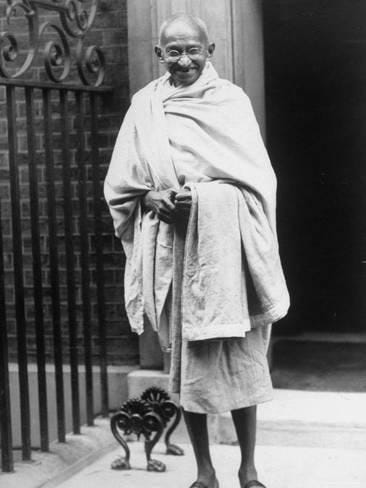
A priori, you might also think that a nonviolent movement would have no hope of resisting a government that is prepared to use force.
But again, you would be mistaken. Nonviolent protestors have prevailed against government force many times, including in the Indian independence movement, the American Civil Rights movement, the Polish Solidarity movement, the Estonian movement for independence from Russia, and the movement to oust Egyptian President Hosni Mubarak.
2. Avoiding Conflict
Common causes of conflict
Obviously, the preferable approach is to avoid getting into a conflict in the first place. Here are four common causes of conflict:
Conflict Spirals: Wars do not arise from disputes between the peoples of two nations. They arise from intergovernmental disputes. One government does something that another government finds provocative; the second government retaliates; the first retaliates a little more; and so on.
Some wars are fought over dominance. E.g., part of why the Iran-Iraq war of the 1980’s happened is that Saddam Hussein wanted to position Iraq as the leader of the Arab world, for which purpose he thought he had to defeat Iran.
These first two sources of conflict would be avoided by an anarchic society.
Some wars are fought over resources, e.g., the Iraqi invasion of Kuwait in 1990 and the subsequent U.S.-Iraq war.
Some wars are based on historical territorial disputes, as in the Arab-Israeli conflict.
These last two causes can apply to either a governed or an ungoverned territory; however, neither is inevitable. The first anarchist societies should be started in regions that lack disputed natural resources or historical territorial disputes (so, don’t start your anarchist paradise in the Middle East).
The liberal democratic peace
War has declined over the last century, especially since World War II. This is largely due to the spread of liberal democracy. Liberal democratic nations virtually never go to war with each other, partly because liberal democracies are much less aggressive than dictatorships. Most voters don’t like war that much, and they’d especially prefer to avoid unnecessary, aggressive wars. Wars tend to cost a lot of money, a lot of soldiers come home in body bags, and it doesn’t often seem worth it just to kill some foreigners.
Note: The U.S. is a bit of an outlier among liberal democracies, with more hawks than other nations. Still, even the U.S. is restrained by voters. E.g., Canada has no fear of being taken over by the U.S. We prefer metaphorical wars, like the war on drugs, the war on poverty, or the war on Christmas.
Liberal democracy has also been spreading across the world over the last two centuries. Therefore, we can anticipate a time when war will be obsolete. The successful anarchist society would begin in a time when liberal democracy has taken over the world, or simply in a region of the globe where they are surrounded by liberal democracies. If, e.g., an anarchist society began in New Hampshire, they would have no fear of attack by anyone other than the U.S. government.
Deterrence vs. provocation
Some people believe that a strong military deters foreign aggression. This seems to make sense a priori: If you look really strong, I probably won’t attack you. However, government leaders may not be subject to the right incentives, because the leaders rarely face personal risks from armed conflict; they only risk wasting the country’s money and having their people get killed, which they may not care about.
It also could be that a strong military increases the risk of war, perhaps because (i) it makes your leaders act more aggressively, or (ii) it makes foreign countries more suspicious of your country, or (iii) it creates a powerful domestic interest group (the ‘military-industrial complex’) with an interest in war.
If militarization deters war, then I suppose we should, ceteris paribus, see a negative correlation between a country’s degree of militarization and its probability of going to war. If we saw that, surely the deterrence theorists would trumpet that as evidence for their theory.
When I looked at the empirical evidence, it looked like there was no evidence for the deterrence theory; militarization has either no correlation or a slight positive correlation with probability of going to war. (See https://www.jstor.org/stable/174478.)
Countries with no military
When I did research on this, there were 15 countries in the world with no military. (Andorra, Costa Rica, the Federated States of Micronesia, Grenada, Kiribati, Liechtenstein, the Marshall Islands, Nauru, Palau, Saint Lucia, Saint Vincent and the Grenadines, Samoa, the Solomon Islands, Tuvalu, and Vatican City.) The largest of these is Costa Rica, which abolished its military in 1948 and has been at peace since then. This suggests that a governmental military is not always needed for national security.
3. The Dangers of “National Security”
The risk of needless wars
If you’re a moral person (as all my readers are), you would also worry about the risks created for the rest of the world by having a governmental military and national security apparatus. There is a nontrivial risk that this “defense” apparatus will in fact be used for unnecessary wars.
You may find this shocking, but that very scenario may have played out with the U.S. military. More than once! The Vietnam war may have killed a million people, including perhaps half a million civilians. The 2003 Iraq war might have killed 600,000 people. In both cases, it is hard to see that any comparable benefit was produced. As long as we have a large military, we are at risk of doing this again. This is a very large cost.
Existential risk
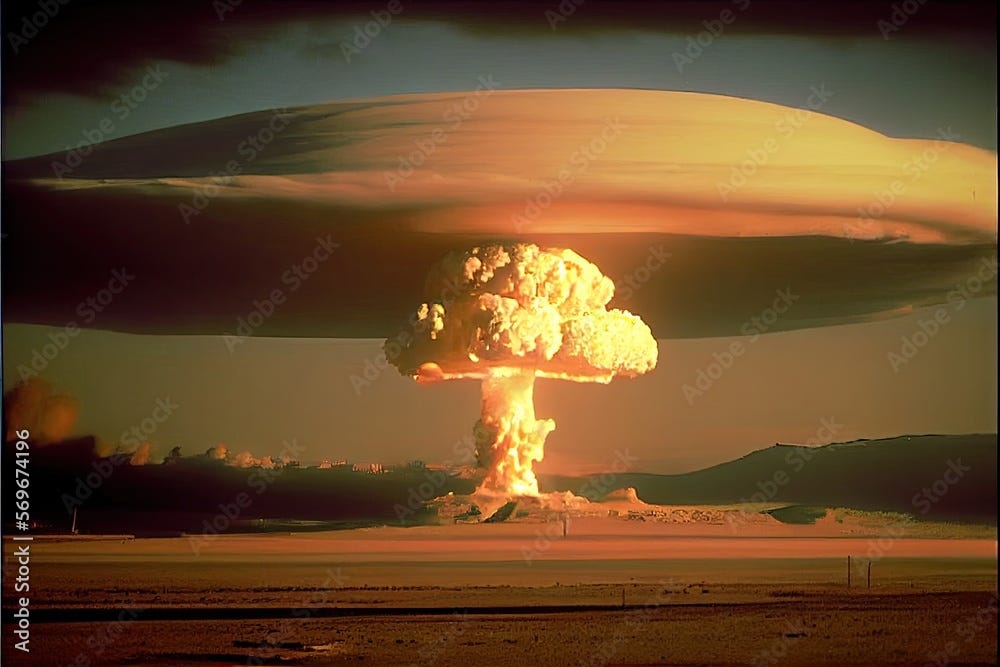
There’s a pretty good chance that we humans are going to destroy ourselves. When we do, there’s a pretty good chance that we’ll do it via government. (Especially the U.S. government, in fact.)
Why do I say that? Look at history. As I mentioned at the outset, the only agents ever to destroy an entire city, or kill over a million people, are governments. The only presently existing technology plausibly capable of wiping out the species was invented by the U.S. government in the 1940’s. The U.S. government is also the only organization ever to deploy this weapon, to destroy two cities. During the Cold War, the U.S. and Soviet Union came close to nuclear war a couple of times. During the Cuban Missile Crisis, President Kennedy thought the odds of winding up in a nuclear war were about 1 in 3.
Nuclear weapons aren’t the end of the line either. Governments around the world continue to conduct military research to devise ever more destructive technologies, capable of killing more people at lower cost. The U.S. government is the most dangerous, not because they’re the most evil (they are better than most governments), but simply because they are better funded and more advanced than any other government. So the technology that winds up killing everyone will likely be invented by the U.S. government.
If we know of an organization that has a pretty good chance of eventually killing everyone, I think we should think about shutting down that organization.
4. Conclusion
Should we keep government around, just to protect us from other governments? Probably not. It’s not clear that a government military makes you safer rather than putting you at greater risk. Guerilla warfare and nonviolent resistance are viable alternatives to a governmental army. Although an anarchist society would not work in all places and times, it could plausibly work if started in a region without historical sources of conflict, especially a region surrounded by liberal democracies. Many government-controlled societies already have no military and have not been immediately taken over.
Maintaining a government military also creates a risk that the military will be used for unnecessary wars, which tend to kill hundreds of thousands of people. There is a further risk that the military will end the human species, whether directly or indirectly through inventing the technology that will be used to extinguish the species.
[ *Based on: The Problem of Political Authority, ch. 12. ]
The defense problem really is the hardest challenge for anarchists because it’s structurally different from replacing police or courts. Police and arbitration scale in a modular, case-by-case way that markets can handle, but military defense is a collective, existential function that requires unified strategy, unified command, and credible signaling to external actors. It’s also a public good that can’t be limited to paying customers. That discontinuity is why limited-government advocates treat defense as the one function that markets can’t easily replicate, and why any anarchist theory has to meet a higher burden of proof here than in other areas.
I believe that if the U.S. devolved into a stateless territory, the most likely scenario would be small and medium sized cities governed by private associations. From such private associations there would be many private security forces and from such organizations there could be formed volunteer militias to serve in the event of an attack against them (individually and collectively).